
There is a common misconception that when you cross the border into the European Union, everything magically turns into Euros. I landed in Prague, grabbed a coffee at the airport, tapped my card, and didn’t think twice about it.
Location: Outside an ATM in the Old Town
Time: 09:15 AM
Vibe: Confused and calculating
Mood: Cautious
Soundtrack: The mechanical whir of an ATM dispensing colorful notes
Then I got into the city center and tried to buy a bottle of water from a small kiosk. The vendor pointed to a sign that said: Pouze Hotovost (Cash Only). I pulled out a 20 Euro note. He shook his head. Welcome to the Czech Republic. You are dealing with the Czech Koruna (CZK) now.
The “Zero Commission” Trap
I needed cash, so I started walking through the Old Town looking for an exchange bureau. Prague is infamous for its currency traps. Every fifty meters, there is a bright neon sign screaming “0% COMMISSION!” in multiple languages.
I walked into one. The board on the wall had two columns. They were offering to buy my Euros at a rate that was almost 30% lower than the actual global market rate. They technically don’t charge a “commission fee,” but they steal your money through a terrible, hidden exchange rate. I turned around and walked right back out. It is a harsh lesson: in Prague, never trust a neon sign promising you a good deal.
The ATM Golden Rule
I decided to just use an ATM. But even that is a minefield. I bypassed the heavily branded, standalone “Euronet” ATMs scattered around the tourist shops—they are notorious for terrible conversion rates and high fees. Instead, I found a legitimate, local Czech bank branch (Česká spořitelna).
I inserted my card and asked for 1,000 CZK. The screen prompted me with a choice: Continue WITH conversion or Continue WITHOUT conversion. Always, always choose “Without Conversion.” Let your home bank do the math, not the random machine in Prague. The machine spat out a handful of beautifully designed, colorful Koruna notes featuring local writers and politicians I had never heard of. I finally had local purchasing power.
The Cash-Only Pubs
Why do you even need cash in 2026? Because the best parts of Prague still refuse to use plastic. Later that night, I escaped the center and went to a dark, wood-paneled pub in the Žižkov neighborhood. I ordered a half-liter of Pilsner Urquell. When I went to pay, the bartender tapped a worn-out piece of paper taped to the register. Cash Only.
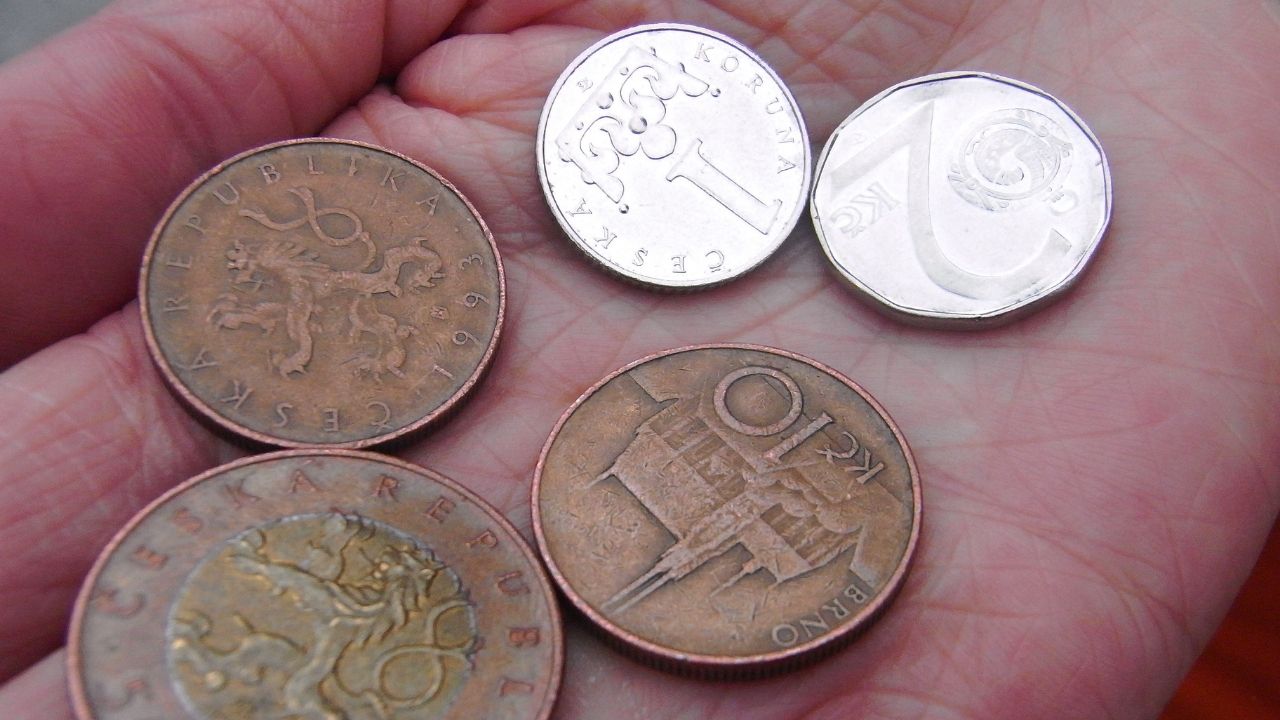
There is something deeply satisfying about slamming a few metal CZK coins onto a wooden bar to pay for a cold beer. It forces you to interact with the local economy in a tangible, old-school way.
The Verdict
Dealing with a separate currency is annoying. Constantly doing mental math to figure out how much your dinner actually costs in your home currency is exhausting. But it also insulates the Czech Republic. It is part of the reason a pint of world-class beer here still costs a fraction of what it costs in Paris or London. Learn the math, avoid the traps, and always carry coins.
My “Eat Walk Repeat” Note for Today:
Eat: Prices in CZK look terrifying at first. A dinner might cost 400 CZK, but don’t panic—that’s a perfectly normal, affordable price once you do the conversion.
Walk: Walk past the exchange booths. Use a legitimate bank ATM (Raiffeisen, ČSOB, KB) attached to an actual building.
Repeat: Break your large 1,000 or 2,000 CZK notes at a supermarket or a chain coffee shop. Small local pubs will absolutely hate you if you try to buy a single beer with a massive bill.