
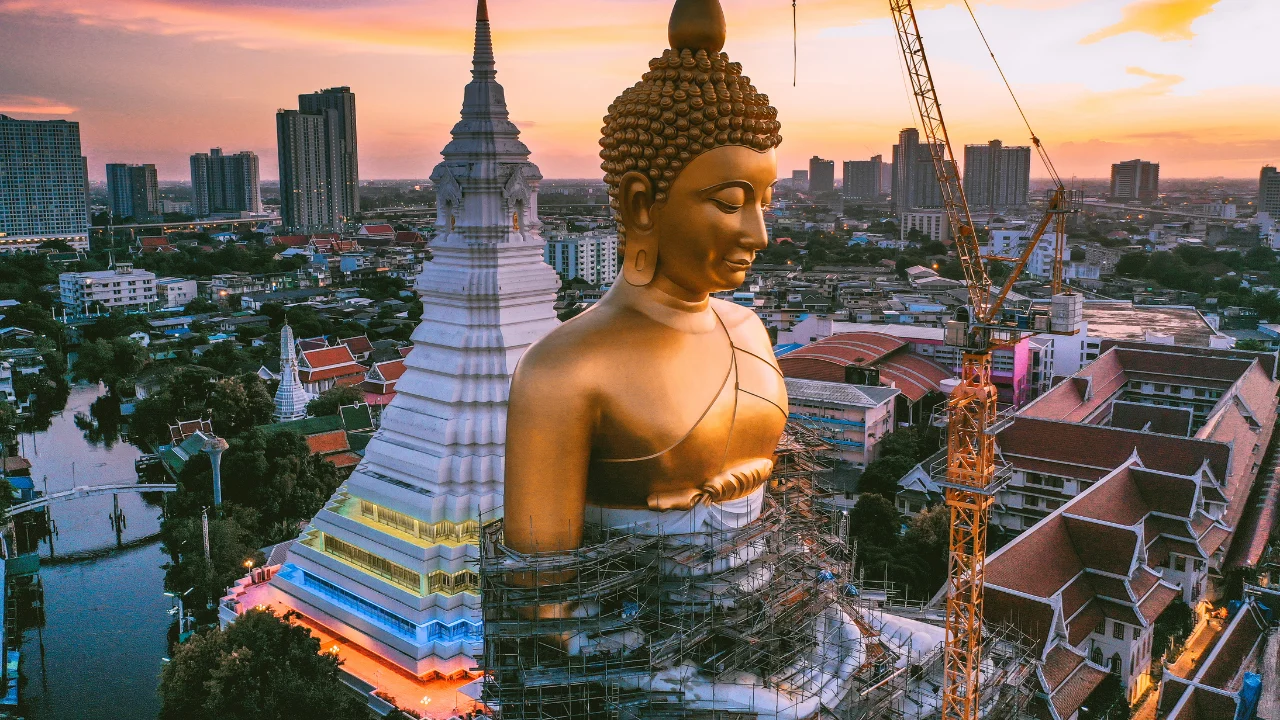
After surviving the blinding gold of the Grand Palace, I needed something slightly more grounded. Right next door is Wat Pho, one of the oldest and largest temple complexes in Bangkok. It is famous for being the birthplace of traditional Thai massage, but I was here for one specific reason.
Location – Wat Pho to Wat Arun
Time – 04 30 PM
Temperature – 33°C (91°F)
Mood – Rushed but mesmerized
Soundtrack – Monks chanting and the deep hum of river ferries
I took off my shoes, stepped onto the cool tiles of the main hall, and looked up.
The Sleeping Giant
You can read the dimensions beforehand—46 meters long, 15 meters high—but numbers do not prepare you for the physical reality of the Reclining Buddha.
The statue is so massive that it barely fits inside the building. It looks like the temple was built tightly around the golden giant. Walking along the length of its body, you feel incredibly small. The Buddha’s face is serene, resting on its right hand, staring peacefully forward. I walked all the way down to the feet, which are exactly three meters long and intricately inlaid with mother-of-pearl panels detailing the 108 auspicious symbols of the Buddha.
Along the wall, there is a line of 108 bronze bowls. The echoing, rhythmic sound of visitors dropping heavy metal coins into each bowl for good karma creates a hypnotic soundtrack for the room.
The Race Across the River
I checked my watch. It was 5 15 PM. The sun was starting to drop, which meant it was time for the second half of the route.
I left Wat Pho and fast-walked through the humid streets to the Tha Tien Pier. For just a few Baht, I jumped onto a rusted, flat-bottomed wooden ferry. The Chao Phraya River was wild with evening traffic—longtail boats, massive cargo barges, and dinner cruisers.
The ferry sputtered across the murky water toward the western bank (Thonburi). Looming directly in front of me was the massive, jagged silhouette of Wat Arun (The Temple of Dawn).
The Porcelain Tower
Despite its name, Wat Arun is best experienced at sunset. Unlike the solid gold of the other temples, Wat Arun is a towering Khmer-style spire covered entirely in millions of pieces of broken Chinese porcelain and seashells.
I climbed the steep, incredibly narrow steps of the central tower. From halfway up, I turned around. The sun was sinking behind the temple, casting a warm, orange glow over the river and the entire Bangkok skyline on the opposite bank. The chaos of the city felt very far away.
The Verdict
This two-temple route is a masterclass in scale and timing. Wat Pho gives you an overwhelming sense of size inside a closed space, while Wat Arun gives you an architectural marvel set against the open sky and water. Doing them back-to-back as the sun goes down is the perfect Bangkok afternoon.
My “Eat Walk Repeat” Note for Today
Eat – After Wat Arun, cross back to the eastern side and find a street cart selling Pad Kra Pao (spicy basil pork with a fried egg) to recover the calories you burned climbing those steep temple steps.
Walk – The steps at Wat Arun are no joke. They are almost vertical. Take your time walking down, and hold onto the railing tightly.
Repeat – Buy a bag of 108 satang coins at the entrance of Wat Pho. Dropping them one by one into the bronze bowls is strangely meditative and a great way to slow your heart rate down in the heat.
Explore More of My Bangkok Diaries
If you enjoyed this diary, check out the rest of my Bangkok series to see the city beyond the typical tourist paths
🍽️ Eat & Drink
- Bangkok Food Diaries The Chaos and Fire of Yaowarat Road
- Escaping the Humidity at a Sukhumvit Rooftop Bar
🎟️ Things To Do
- The Golden Overload Surviving the Heat at the Grand Palace
- The Canal Diary Riding a Longtail Boat Through the Backwaters
🗺️ Itineraries
- The Temple Route Staring at the Giant Reclining Buddha
- The Weekend Labyrinth Getting Hopelessly Lost in Chatuchak Market
🚇 Essentials
- The 7-Eleven Oasis Surviving Bangkok’s Relentless Humidity
- The Tuk Tuk Trap Negotiating the Neon Traffic
🏘️ Neighborhoods
- Khao San Road Diaries The Loud Sticky Heart of Backpacker Asia
- Sukhumvit Diaries Neon Malls and the Modern Metropolis
🌦️ Seasonal
- Bangkok in the Monsoon Surviving the Sudden Downpours
- Bangkok in April The Madness of the Songkran Water Festival